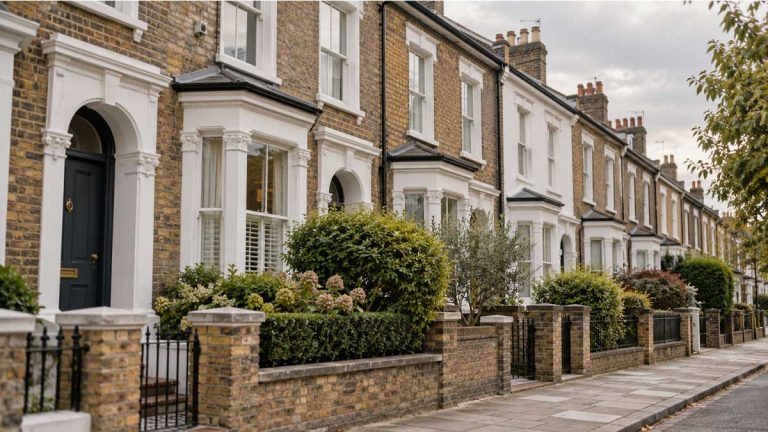
The house auction process doesn’t mean standing in a room raising a paddle. Here’s what actually happens when you sell your property through modern property auction.
Table of Contents
The house auction process has a clear sequence, and knowing it in advance removes most of the uncertainty. It starts with a valuation and a guide price, moves through the legal pack and the reservation, and ends with the fall of the hammer and completion. Each stage has a purpose, and this guide walks through them in order.
Before the auction, the house auction process depends on preparation. Your solicitor prepares the legal pack, which buyers review before they bid, and the guide price is agreed with the auction house. The more complete the pack, the more confident buyers feel, and the smoother the sale tends to run on the day.
On auction day, the house auction process moves quickly. Bidding follows the auction’s rules, and when a bid meets your reserve the property is sold, with the buyer committing through the reservation fee. Completion then follows within the fixed period, usually 28 or 56 days, which is what gives the process its certainty.
Because the house auction process is fixed, both sides know where they stand. The government’s guidance on buying and selling your home explains the wider steps, and your Zelto contact can talk you through how each stage applies to your property.
House Auction Process - Guide Price and Reserve Price
Your property is listed with a Guide Price, an indication of where bidding is expected to start. Behind that sits a confidential Reserve Price, known only to you and the auctioneer, typically within 10% of the guide price. The property won’t sell for less than the reserve.
How Bidding Works
Unlike a traditional room auction, online property auction lets buyers bid before, during or after the auction event itself. You’re not tied to a single afternoon, bidding can run over days or weeks.
Reservation
Once a bid meets your reserve, the buyer reserves the property by paying a non-refundable reservation fee (typically 5% plus VAT, minimum £6,000 plus VAT). This fee is separate from, and doesn’t reduce, the price you receive.
- Paid by the buyer once a bid meets your reserve
- Non-refundable
- Typically 5% plus VAT, minimum £6,000 plus VAT
- Separate from the price you receive, so it does not reduce it
Legal Pack
Every property comes with a Legal Pack, title deeds, special conditions of sale, and searches, published online so buyers and their solicitors can review it before bidding.
- Title deeds
- Special conditions of sale
- Searches
- Published online so buyers and their solicitors can review it before bidding
Completion
Once reserved, the sale is legally binding. You choose the terms upfront: 28 days to completion on Unconditional terms, or 56 days on Conditional terms.
- Legally binding once the property is reserved
- 28 days to completion on Unconditional terms
- 56 days to completion on Conditional terms
- You choose the terms upfront
Ready to see what your property could fetch? Your valuation is free, with no obligation to go ahead.
Frequently asked questions
Who pays the reservation fee?
The buyer, not you. On reservation lots it is non-refundable, set at 5% + VAT with a minimum of £6,000 + VAT, and it does not count toward the purchase price.
How long does a sale take?
You choose. On the unconditional track the buyer is bound on the day and completes in 28 days. On the conditional track they have 28 days to exchange contracts and a further 28 days to complete, 56 days in total. Timings are typical and can vary by auction partner.
What is a reserve price?
The lowest price you are willing to accept. You set it with our advice, and the property is only sold once bidding reaches it, so it never sells for less than you want.
What happens when the hammer falls?
On both tracks the buyer pays a non-refundable deposit and a £780 admin fee immediately. On the unconditional track they also pay a 10% non-refundable deposit (minimum £3,600) and are legally bound on the spot.
What if the buyer pulls out?
They lose the non-refundable money they have already paid, not you. That is the main difference from the open market, where a buyer can walk away and lose nothing.